On this page
Why people ask about a second visit
Most people who ask about a second visit have been caught out before. A firm quoted a figure on the phone, turned up, found part of the problem and then said the rest would need another trip, with another charge attached. By the time the leak was dealt with, the bill bore little resemblance to the first number. The worry is sensible, and it deserves a straight answer rather than a soothing one.
The straight answer starts with what the money buys. The detection visit is one fixed price of £480, every method included, agreed before we attend. No VAT is charged. That visit covers locating the leak with every method it needs, and the written report, in one visit to a single domestic property in London. It is a defined piece of work with a defined end: the leak is located and the findings are written down.
A second visit is not a single thing, though. It can mean the repair, it can mean another attempt at a leak that proved hard to pin down, or it can mean a trip caused by something outside anyone’s control, such as a locked door. Each has a different answer, and this page takes them one at a time. It is also honest about the limits: what is confirmed is set out plainly, and what is agreed in writing at the time is said to be exactly that.
What the detection visit price covers
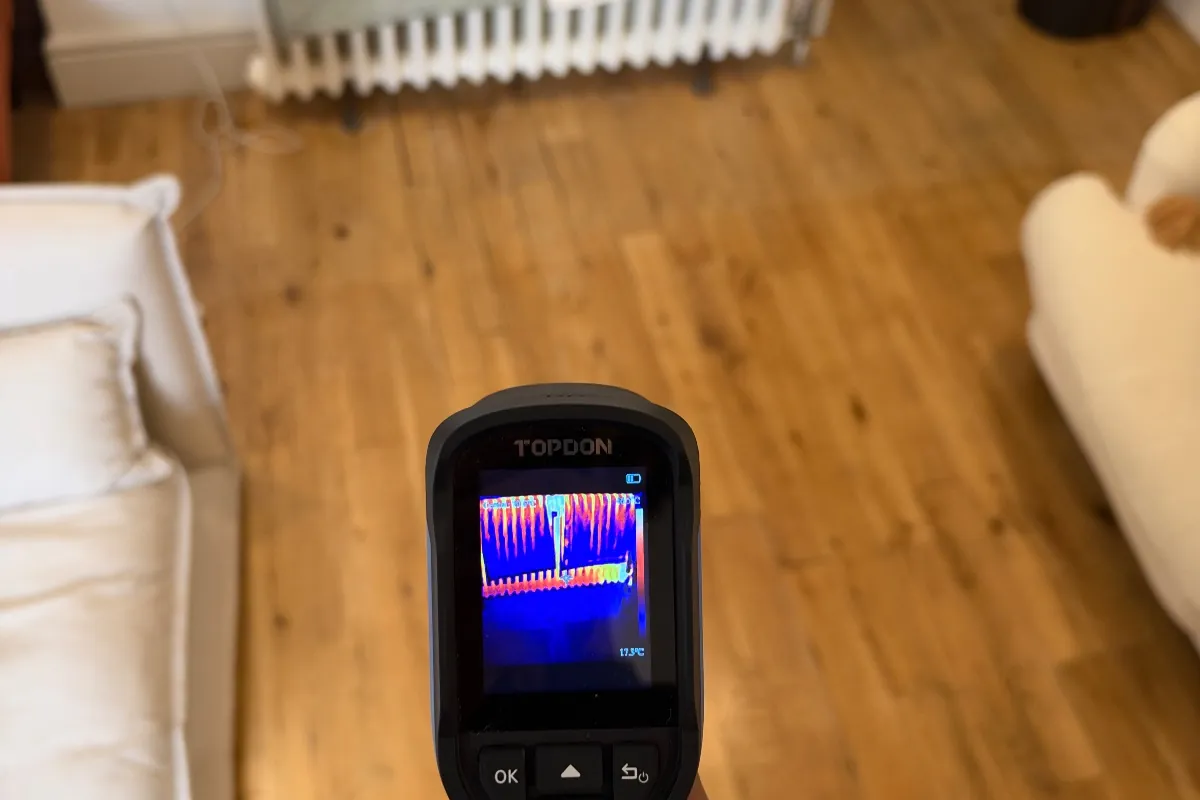
Before looking at a second trip, it helps to be clear about the first. The visit price is for locating the leak and producing the written report at a single domestic property in London. The methods used to find the leak, such as acoustic listening, thermal imaging and tracer gas, are part of that one visit. Moving from one method to the next does not turn into a series of separate charges. The what is included page lists the methods and what the report contains.
The price is stated up front, before anyone attends. One fixed price of £480, every method included, agreed before we attend. No VAT is charged. That figure, £480, is the figure for the detection visit and nothing else. It is not a deposit against a repair, and it is not an estimate that grows when the search takes a different turn.
The reason for stating this so plainly is that the phrase second visit only causes trouble when the first price was vague. If a price was never tied to a clear piece of work, every later step becomes arguable. When the price is tied to locating the leak and writing it up, the next question is simply what the next piece of work is, and who quotes it.
The repair is a separate job
Finding a leak and mending it are different jobs. The first answers where the water is escaping and why. The second stops it. Here they are quoted separately on purpose, so that neither one hides inside the other.
Repair work is quoted separately in writing before it starts, as one fixed price with labour, parts and materials set out. No VAT is charged. The quote is the document that matters. It names the pipework to be worked on, says what will be done, and sets out labour, parts and materials so that you can see what each part of the job costs. There is no rate attached to the time spent finding the leak and no running meter on the repair.
This is where the question about a second visit usually resolves. Because a repair is quoted as one price for the job, the number of trips the job takes does not change that figure once you have accepted it. That is simply how a quoted price for a job works: you agree a price for the work, and the work is done for that price. It is confirmed in writing in the quote itself, which is the place to read it, so you are not relying on anyone’s memory of a conversation.
If the quote does not say so, or if anything in it is unclear, ask before you accept. A good quote answers the question without being asked. You do not have to accept the repair quote from the same team. The written report says where the leak is, and you can take it to another plumber and ask for a competing quote.
Why a repair can take more than one trip
Plenty of repairs are finished in one go. Some are not, and the reasons are usually mundane. Knowing them in advance helps you see that a further trip is not a sign of anything going wrong.
- Access is blocked. A cupboard is full, a bath panel is sealed, a loft hatch is behind stored boxes. If the pipe cannot be reached, the work waits until it can.
- Nobody is in. A key holder was not available, or the occupier had to be out. This is common in rented flats where the tenant, the landlord and the managing agent are three different people.
- An opening has to be made and made good. Cutting into a floor or a wall and putting the surface right afterwards are separate pieces of work, usually handled by a partner team, and the finish may need time to dry before it is decorated.
- A part has to be ordered. An older valve or an unusual fitting may not be to hand, and the repair cannot be completed without it.
- The leak is intermittent. A joint that weeps only under certain pressures or temperatures can behave differently from one visit to the next, which makes it harder to confirm that the repair has worked.
None of these reasons changes the principle. A repair is quoted as one price for the job, and the quote is where the arrangement is confirmed.
If the leak cannot be located
Occasionally the search does not end with a clear answer. Pipes buried in a screed, runs hidden behind fixed units and very slow weeps can all make a leak hard to pin down, and no method is perfect. This is the situation people most want to understand before booking, so it is worth setting out what the policy actually says.
No find, no fee waives the detection fee only when a live leak inside your own property cannot be located. The detail is on the no find, no fee page. Two phrases in that wording carry the weight. The leak has to be live, meaning water is actually escaping now, and it has to be inside your own property. A leak that is found to belong to a neighbour or to a shared riser is a different situation, and the engineer’s report records where it is so that the right person can be approached.
What happens after an unlocated leak is a separate question, and it is not promised in advance on this site. Whether a further search attempt is offered is agreed in writing at that point. That may sound less comforting than a blanket promise, but it is more truthful. The sensible next step depends on what the first visit ruled out, what is still possible and whether another approach is likely to work. Agreeing it in writing means both sides know what has been decided.
Note what this does not say. It does not say that a second search will always happen, and it does not give a figure or a time limit for one, because none is confirmed. If you are told otherwise by someone, ask for it in writing.
How some firms charge for repeat trips
It helps to know how the wider market behaves, because it explains why the question gets asked at all. Some firms charge per trip, so a second attendance is billed as a second attendance, whatever it achieves. Some firms charge for the time a search takes, so a search that runs long produces a larger bill, and a leak that takes two visits to resolve can cost a great deal more than a leak that takes one. Other firms bundle the search and the repair into one figure and leave the customer unable to tell which part is which.
None of these approaches is dishonest in itself. Each, though, makes the final bill hard to predict, and each puts the risk of a slow or awkward job on the customer. A bill that depends on how many times someone had to come back is a bill you cannot check against anything you were told at the start.
The structure used here is different in kind. The detection visit is one price, agreed before anyone attends. The repair is a separate job with its own written quote, set out as one price for the work. Neither is measured by the clock or counted by the trip. If you are comparing quotes, the pricing page shows the structure in one place so you can hold other terms up against it.
How to read any firm’s return-visit terms
Whoever you book with, the terms on return visits tell you a good deal about the shape of the final bill. They are easy to skim past, so it is worth knowing what to look for.
First, look for what the quoted price is attached to. A price for the visit, a price for the job and a price for the first hour all sound alike on the phone and behave very differently afterwards. Second, look for anything that applies only on a repeat attendance: a separate charge, a different rate, a condition about how soon you must book. Third, look at what happens if the work is not finished in one go. If the terms are silent, that silence is the thing to ask about.
Be wary of verbal assurances that are not matched by a document. A promise that a return trip will be dealt with fairly is not a term. A sentence in a written quote that says what is and is not payable on a further attendance is.
Finally, check whether the figure you were quoted is stated with tax. A price quoted without VAT can rise by a fifth at the end. Here, No VAT is charged, and the detection price is £480 as stated, but you should ask every firm the same question and expect a plain answer.
What to ask for in writing before you book
A short list of written answers removes most of the uncertainty about second visits. It is worth asking for these from any firm, including this one, before anything is arranged.
- What exactly does the visit price cover, and where does that cover end?
- Is the repair quoted separately, and will the quote set out labour, parts and materials?
- Does the quoted figure for a repair stay the same if the job takes more than one trip?
- What happens if the leak cannot be located, and is any further search offered or only agreed at that point?
- Is anything payable before the team attends, and if so what for?
- What happens if access is not possible when the team arrives?
- Is tax included in each figure quoted?
The what the visit does not cover page is a useful companion: it lists the items quoted separately so you know which questions to ask about each.
Three situations, and how each plays out
A ceiling stain below a bathroom. The visit locates a failed joint under the bath. The report says where it is and how it was confirmed. The joint is a small repair, quoted in writing, and done once you agree. If the bath panel had to be removed and replaced by someone else, that is a separate arrangement, but the quoted repair figure is the figure in the quote. The stained ceiling is dealt with once it has dried.
A pressure drop with no visible wet patch. The search moves from one method to another and the pipe is located under a screed floor. The visit price covers the locating. Opening the floor and relaying it is a larger piece of work, so it is quoted in writing afterwards, and the quote says what the job involves. How many trips the job takes is not what sets the price; the quote is.
A suspected leak that cannot be located. The team searches with the methods the property allows and cannot confirm where the water is going. Because the leak is live and inside the property, the no-find-no-fee boundary applies and the detection fee is waived, as set out in the no find, no fee wording. Whether another attempt is sensible is discussed then, and anything agreed is written down.
Seen together, the three cases show the same pattern. The visit does what it says, the next step is a separate decision, and the written quote is where the terms are fixed.
What happens after the visit
After the visit you receive the written report. If a repair is wanted, a separate written quote follows. It states what the work is, what it costs and what it does not include. The how it works page walks through the sequence from booking to report.
The decision stays with you at each step. You can accept the quote, ask for changes, take it to someone else or do nothing. A quote that you cannot read, compare and show to an insurer or a landlord is not doing its job, and you should say so.
If an insurer is involved, ask what they need before anything is opened. Many want photographs of the damage as it is, and a record of how the leak was confirmed, before it is disturbed. Whether a policy responds is a matter for the insurer.
If you smell gas at any point, leave the building and ring the National Gas Emergency Service on 0800 111 999. That is not a leak detection matter and should not wait for a visit.
Questions customers ask
Is there a charge for a second visit?
The detection visit is one fixed price of £480, every method included, agreed before we attend. No VAT is charged. A repair is a separate job: repair work is quoted separately in writing before it starts, as one fixed price with labour, parts and materials set out. Anything further is set out in writing before it goes ahead.
Does a repair that takes two trips cost more?
A repair is quoted as one price for the job, so how many trips it takes does not change the quoted figure once you have accepted it. The quote is where this is confirmed in writing, so read it before you agree.
What if the leak cannot be located?
No find, no fee waives the detection fee only when a live leak inside your own property cannot be located. Read the no find, no fee wording for the detail. Whether a further search attempt is offered is agreed in writing at that point.
What if nobody can give access on the day?
A blocked or unattended property can mean another trip. Tell the team about access when you enquire, such as keys, a managing agent or stored items in the way, so the visit can be arranged to avoid it.
Is a further search attempt promised if the leak is not found?
No. Whether one is offered is agreed in writing at that point, once it is clear what has been ruled out and whether another approach is likely to help.
What should I ask other firms about return visits?
Ask what the price is attached to, whether anything is charged only on a repeat attendance, and what happens if the work is not finished in one go. Get the answers in writing and compare them with the pricing page.